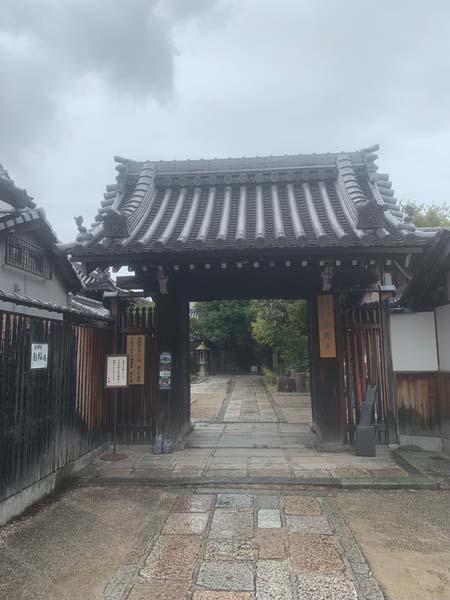
Senkoji, or 全興寺, is a Koyasan Shingon Buddhist temple in Hirano Ward.
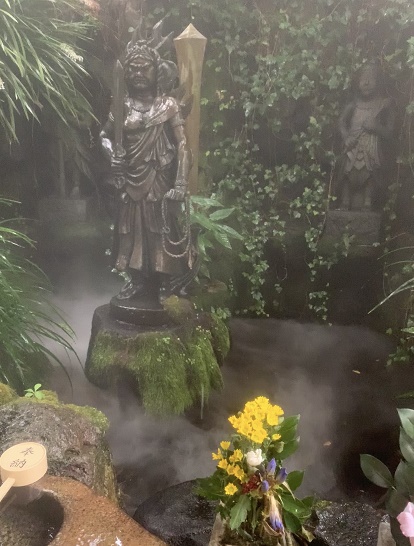
For a series about the princes of Japanese Hell, there is perhaps no more appropriate temple in Osaka than Senkoji. There are statues of our boys, a little cinema where you can watch a film explaining Japanese Hell, and hundreds more references to the afterlife.
According to the temple's own tradition, its history goes back around 1,300 years, when Prince Shotoku established a small Buddhist hall here and enshrined a statue of Yakushi Nyorai, the Medicine Buddha. The temple grew around that original hall, and the surrounding settlement of Hirano developed alongside it. The current main hall was rebuilt in 1661 after part of the temple was destroyed during the Siege of Osaka.
But you are here to go to Hell.
Senkoji has a building called Jigokudo — the Hall of Hell. For a small fee, you can take the “Hell Pass” and enter a miniature journey through Buddhist ideas about the afterlife. First, you can check your “Hell level” and “Paradise level.” Then you enter the hall, where Enma Daio, the King of Hell, is waiting for you together with demons and Datsueba, the old woman associated with the Sanzu River who strips the clothes from the dead. A short film and sound presentation explain what happens to people after death and the punishments associated with different wrongdoings.
For me, this is one of the places where the real-world inspiration behind Divine Debris becomes particularly obvious. The Japanese Buddhist underworld is not simply one big fiery pit. It has judges, rivers, gates, demons, punishments and different destinations for the dead. There is a whole cosmology behind it, and Senkoji has turned some of that cosmology into something you can actually walk through.
And then things get stranger.
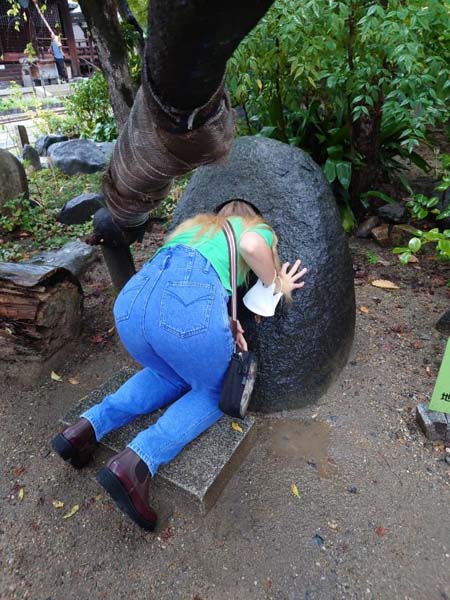
Outside the Hall of Hell is a stone with a hole in it. Put your head into the opening and you are supposed to hear the sound of the boiling cauldron of Hell. Whether you hear it or not may depend on the person. I certainly wouldn't recommend sticking your head into mysterious holes in stones with your butt outside as a general life philosophy. But here it is part of the experience... and well, I did it a lot for inspiration.
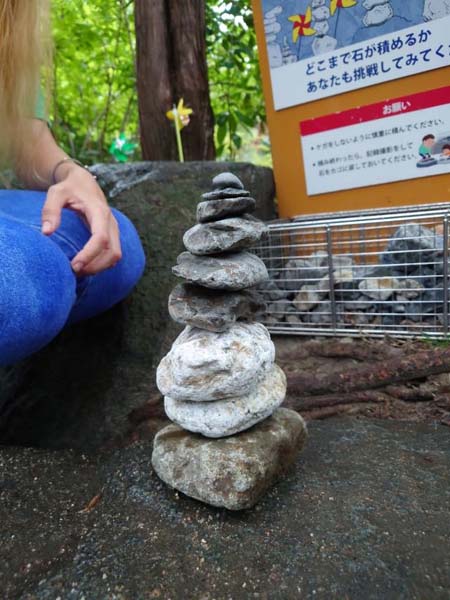
Then there is Sai no Kawara, where you can arrange the stones like the spirits of dead children are traditionally said to do in the afterlife. The idea comes from the traditional Buddhist image of children who have died being unable to cross the Sanzu River. They build little towers of stones as an act of devotion to their parents, but demons knock the towers down. The children start again, only for the work to be destroyed again.
And then, somehow, right in the middle of all this Hell, there is an Enmusubi shrine.
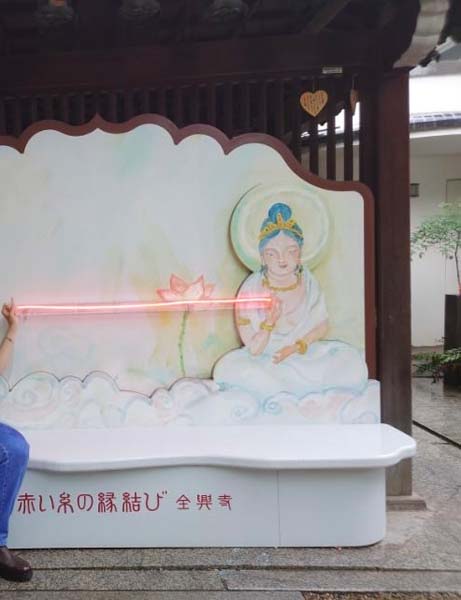
Senkoji has a red-thread matchmaking experience, with a special photospot where you can connect yourself to the Buddha with a red string. Enmusubi is the Japanese idea of forming bonds and connections, particularly romantic ones, and the red thread is a familiar symbol of the invisible ties that connect people.
I have to admit that I find the placement absolutely perfect. This is a temple where you can visit Hell, meet Enma and his minions/children, hear the sound of the boiling cauldron and then take a cute photo with a red string of fate.
If this sounds like something I would put into a book that is because it absolutely is.
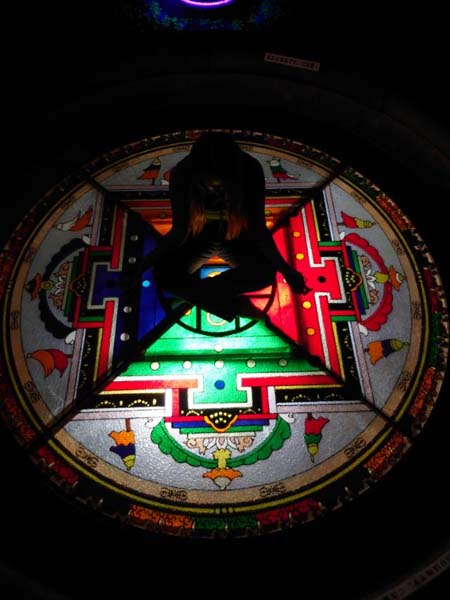
The underground section of the temple is called Hotoke no Kuni — the Land of Buddhas. A staircase leads down into a dark, quiet space containing around 150 stone Buddhist figures and a large mandala. It is intended as a place for meditation, a complete change of atmosphere after the noisy and theatrical journey through Hell.
The staircase itself has an unusual connection to pilgrimage. Sand from the sacred temples of the 88-temple pilgrimage route in Shikoku has been incorporated into the handrails. In other words, you are symbolically carrying the pilgrimage with you as you descend into the underground Buddha Land.
This part of the temple is much quieter than Jigokudo, and it should be treated as a place for meditation and prayer rather than another attraction to rush through. The same goes for the rest of the temple. Senkoji has a playful side and clearly enjoys presenting Buddhist ideas in ways that ordinary visitors can interact with, but it is still an active temple.
It can be funny. It can be creepy. It can be genuinely beautiful. For Divine Debris, I couldn't ask for a better real-world location. The only thing missing is the actual princes of Hell standing around complaining about how inaccurate the movie is.